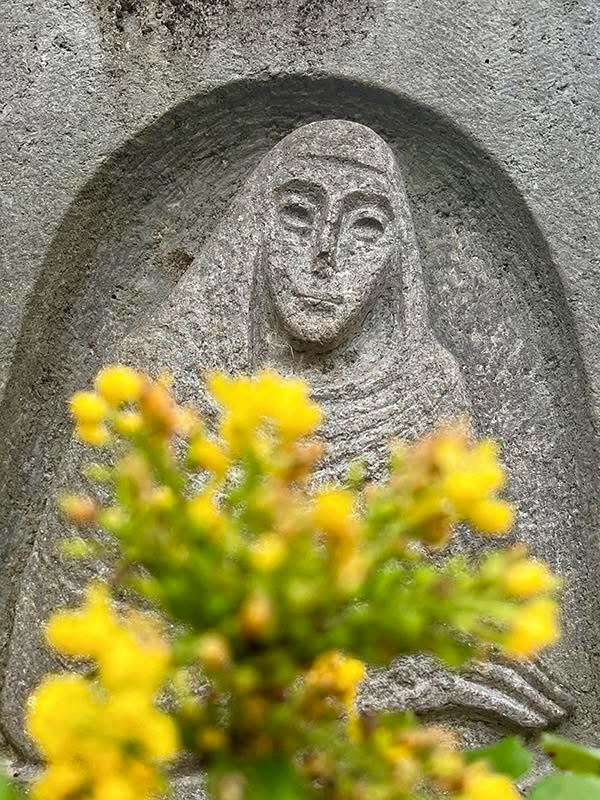
Roswitha von Gandersheim / Photo ©John Byford 2026
🇩🇪 Roswitha von Gandersheim – Europas erste Dramatikerin
Roswitha von Gandersheim (auch Hrotsvitha oder Hrotsvit) war eine Kanonisse, Dichterin, Dramatikerin und Historikerin des 10. Jahrhunderts. Sie gilt als Europas erste bekannte Dramatikerin und zählt zu den bedeutendsten literarischen Persönlichkeiten des Mittelalters. In einer Zeit, in der Frauen nur selten Zugang zu Bildung oder die Möglichkeit zum Schreiben hatten, schuf Roswitha ein außergewöhnliches Werk aus Theaterstücken, Dichtung und historischen Schriften, das ihr einen festen Platz in der europäischen Literaturgeschichte sicherte.
Geboren wurde sie um das Jahr 935 im heutigen Niedersachsen. Ihr Leben verbrachte sie im Stift Gandersheim, einem bedeutenden geistlichen und kulturellen Zentrum des Heiligen Römischen Reiches. Als Kanonisse gehörte sie einer angesehenen Gemeinschaft an, die Bildung, Wissenschaft und die Künste förderte. Sie erhielt eine für ihre Zeit außergewöhnliche Ausbildung und hatte Zugang zu einer umfangreichen Bibliothek, wodurch sie sich intensiv mit den Werken der antiken römischen Autoren beschäftigen konnte.
Besonders geprägt wurde Roswitha vom römischen Dramatiker Terenz. Im Gegensatz zu dessen oft weltlichen und moralisch fragwürdigen Stoffen schrieb sie sechs Theaterstücke, die christliche Werte in den Mittelpunkt stellten. Ihre Werke erzählen von Mut, Glauben, Weisheit und der Stärke von Frauen und gelten bis heute als bemerkenswert fortschrittlich. Darüber hinaus verfasste sie Legenden über christliche Heilige sowie historische Werke über die ottonische Herrscherdynastie und die Gründung des Stifts Gandersheim.
Nach ihrem Tod gerieten ihre Schriften über Jahrhunderte weitgehend in Vergessenheit. Erst während der Renaissance wurden sie wiederentdeckt und fanden internationale Anerkennung. Heute wird Roswitha nicht nur als Europas erste bekannte Dramatikerin gewürdigt, sondern auch als herausragende Dichterin und Historikerin, deren Werke einen einzigartigen Einblick in das geistige und kulturelle Leben des Mittelalters vermitteln.
Roswitha und Bad Gandersheim
Bis heute prägt Roswitha das kulturelle Selbstverständnis Bad Gandersheims und ist ein wichtiger Teil der Identität der Stadt. Jeden Sommer finden hier die international bekannten Gandersheimer Domfestspiele statt – eines der traditionsreichsten Freilichttheaterfestivals Deutschlands. Vor der eindrucksvollen Kulisse der Stiftskirche wird dort die darstellende Kunst gefeiert, nur wenige Schritte von dem Ort entfernt, an dem Roswitha einst lebte und schrieb.
Wer Bad Gandersheim besucht, begegnet Roswitha an vielen Stellen der Stadt. Denkmäler, Ausstellungen und historische Orte erzählen ihre Geschichte und machen die Kurstadt zu einem besonderen Ziel für alle, die sich für Literatur, Geschichte und das mittelalterliche Europa interessieren.
Seit 1979 verbindet die Städtepartnerschaft Skegness und Bad Gandersheim. Roswitha steht dabei sinnbildlich für die kulturellen Beziehungen zwischen beiden Städten. Ihr Leben zeigt, dass Kreativität, Bildung und Entschlossenheit ein Vermächtnis schaffen können, das mehr als tausend Jahre überdauert.
Auch mehr als ein Jahrtausend nach ihrem Tod inspiriert Roswitha Menschen auf der ganzen Welt – Autorinnen und Autoren, Historikerinnen und Historiker sowie Theaterliebhaberinnen und Theaterliebhaber gleichermaßen. Als erste bekannte weibliche Stimme der europäischen Dramatik bleibt ihr Werk lebendig und ihr Einfluss bis heute spürbar.
🇬🇧 Roswitha of Gandersheim ~ Europe's First Female Playwright
Roswitha of Gandersheim (also spelled Hrotsvitha or Hrotsvit) was a German canoness, poet, dramatist and historian who lived during the 10th century. She is widely regarded as Europe's first known female playwright and one of the most important literary figures of the medieval world. At a time when very few women had the opportunity to write, Roswitha produced plays, poetry and historical works that secured her place in literary history.
Born around AD 935, Roswitha lived in the Imperial Abbey of Gandersheim in what is now Lower Saxony, Germany. As a canoness, she belonged to an influential religious community that encouraged education, literature and the arts. Unlike many women of her era, she had access to an extensive library and received an exceptional education, enabling her to study the works of classical Roman authors.
Inspired by the Roman playwright Terence, Roswitha wrote six plays that reflected Christian values rather than the often immoral themes found in classical theatre. Her dramas celebrated courage, faith, wisdom and the strength of women, making them remarkably progressive for their time. Alongside her plays, she also wrote epic poems about Christian saints and historical accounts documenting the Ottonian dynasty and the founding of Gandersheim Abbey.
Although her writings were largely forgotten for several centuries, they were rediscovered during the Renaissance and have since earned her international recognition. Today, Roswitha is admired not only as Europe's first known female playwright but also as a gifted poet and historian whose work provides a unique insight into medieval life and culture.
Roswitha and Bad Gandersheim
Roswitha's legacy lives on in the beautiful spa town of Bad Gandersheim, where she remains a source of great local pride. Every summer, the town hosts the internationally renowned Gandersheim Cathedral Festival, one of Germany's leading open air theatre festivals, celebrating the performing arts in the shadow of the magnificent collegiate church where Roswitha once lived and wrote.
Visitors to Bad Gandersheim can discover Roswitha's story through statues, exhibitions and historic landmarks throughout the town, making it a fascinating destination for anyone interested in literature, history and medieval Europe.
As Skegness has been twinned with Bad Gandersheim since 1979, Roswitha represents an important cultural link between our two communities. Her life reminds us that creativity, learning and determination can leave a legacy that endures for more than a thousand years.
More than a thousand years after her death, Roswitha continues to inspire writers, historians and theatre lovers around the world, ensuring that her voice, the first known female voice in European drama, will never be forgotten.